
Online Info Sessions
Questions about our programs? Join the Department of Counseling and Family Sciences for one of our helpful online info sessions.
Register

Loma Linda University's PhD in Systems, Families, and Couples is a COAMFTE-accredited doctoral program built for those ready to advance the field of couple and family therapy as researchers, educators, and clinicians. Following the scientist-practitioner model, the four-year, 90-unit program combines three years of rigorous coursework in research, theory, and applied practice with a year of supervised dissertation experience—preparing graduates for academic, professional, and clinical positions in universities, community mental health, and medical settings. Students choose from elective concentrations in Medical Family Therapy, Clinical Supervision, Community Mental Health Practice, and Global Mental Health, allowing them to tailor their doctoral training to their unique professional goals. The program is the only COAMFTE-accredited PhD program in California—and the only one in the state to meet the requirements for the Certified Family Life Educator (CFLE) designation through the National Council on Family Relations.
PhD, MS, LMFT
Assistant Professor, Counseling and Family Sciences
Director, Systems, Families, and Couples PhD Program
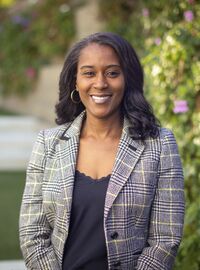
The Systems, Families, and Couples PhD at Loma Linda University follows the scientist-practitioner model, developing family science scholars and practitioners who will advance theory, research, practice, and teaching in the fields of couple and family therapy and family social science. PhD students develop expertise in conducting original research using quantitative, qualitative, and mixed-method approaches; teaching in academic and community settings; and advanced clinical practice.
The PhD program is fully accredited by the Commission on Accreditation for Marriage and Family Therapy Education (COAMFTE), the accrediting body of the American Association for Marriage and Family Therapy (AAMFT). The core academic curriculum is composed of 53 units of coursework in the areas of research, theory, and practice, plus 9 units of religion. Students then choose 18 elective units from the following content areas:


The Systems, Families, and Couples PhD program has been the missing piece in my professional journey. It has expanded the foundation I built as a clinician and prepared me to step confidently into research and academia. Our dedicated faculty have recognized the potential in my ideas and guided me in refining them, helping me transform early concepts into research that is both rigorous and purposeful. With their balance of support and challenge, I’m moving into the next chapter of my career with clarity and purpose.
Most candidates enter the Systems, Families, and Couples PhD program in Fall Quarter and complete at the end of Spring Quarter in their fourth year. This requires fifteen consecutive quarters of full-time coursework and commitment to the professional development experience. Classes are held on Tuesdays (online) and Thursdays (on-campus).
Please Note: The curriculum of this program includes attendance during the summer terms.
This sample plan of study is provided as a general guide to illustrate the typical sequence of courses for this program. Course offerings, sequencing, and scheduling are subject to change based on curricular revisions, faculty availability, and student progression. Students who take a Leave of Absence (LOA) or enroll on a part-time basis should expect their program completion term to be extended. Students are encouraged to consult with their academic advisor for individualized academic planning.
| *Summer | Units | Fall | Units | Winter | Units | Spring | Units |
| CFSD 519 | 3 | CFSD 602 | 4 | CFSD 603 | 4 | ||
| CFSD 601 | 4 | CFSD 611 | 3 | CFSD 612 | 3 | ||
| **CFSD 786 | 0 | CFSD 786A | (3) | CFSD 786A | (3) | ||
| Total Quarter Units | 7 | 7 | 7 |
Total Year 1 Units: 21 units
| Summer | Units | Fall | Units | Winter | Units | Spring | Units |
| CFSD 501 | 3 | CFSD 506 | 3 | CFSD 606 | 3 | CFSD 505 | 3 |
| CFSD 546 | 3 | Elective | 3 | Elective | 3 | CFSD 637 | 3 |
| CFSD 786B | (3) | CFSD 786A | (3) | CFSD 786A | (3) | CFSD 540 | 3 |
| CFSD 786A | (3) | ||||||
| Total Quarter Units | 6 | 6 | 6 | 9 |
Total Year 2 Units: 27 units
| Summer | Units | Fall | Units | Winter | Units | Spring | Units |
| CFSD 625 | 3 | CFSD 544 | 3 | CFSD 605 | 3 | CFSD 545 | 3 |
| RELE XXX | 3 | Elective | 3 | Elective | 3 | CFSD 504 | 3 |
| CFSD 786A | (3) | CFSD 786A | (3) | RELR XXX | 3 | CFSD 786A | (3) |
| CFSD 786A | (3) | ||||||
| Total Quarter Units | 6 | 6 | 9 | 6 |
Total Year 3 Units: 27 units
| Summer | Units | Fall | Units | Winter | Units | Spring | Units |
| RELT XXX | 3 | CFSD 698 | 4 | CFSD 698 | 4 | CFSD 698 | 4 |
| CFSD 786A | (3) | ||||||
| Total Quarter Units | 3 | 4 | 4 | 4 |
Total Year 4 Units: 15 units
*The Academic Year begins Summer Quarter. Students entering their programs will begin Fall Quarter and will not have classes during the Summer Quarter of their first year.
**CFSD 786/786A/786B Professional Development courses represent non-academic units. Students take 36 professional development units.
The Systems, Families and Couples PhD program is designed as a purposeful four-year journey that develops you as a scholar, researcher, educator, and professional. Throughout the program, coursework, research, dissertation development, and professional development build upon one another as you move from identifying your scholarly interests to making an original contribution to the field.
Each year represents an important stage in that journey.
Your first year provides the foundation for your doctoral journey. Through coursework, engagement with faculty, research experiences, and exposure to the broader field, you will begin identifying the questions, populations, and areas of scholarship that most interest you.
During this year, you will also initiate your Professional Development Portfolio, establishing goals for your growth as a scholar and professional and beginning to document the experiences and accomplishments that will support your development throughout the program.
Key Milestone: Initiate Professional Development Portfolio
During your second year, you will move from broad scholarly interests toward a more clearly defined area of research. Your coursework and faculty mentorship will help you refine your research questions, consider methodological approaches, and identify the contribution you hope to make through your dissertation.
As your research direction becomes clearer, you will finalize your dissertation topic and select your Dissertation Chair, who will guide the next stages of your doctoral work.
Key Milestones: Finalize Dissertation Topic • Select Dissertation Chair
Your third year represents a significant transition in your doctoral journey as you move from developing your scholarly direction to demonstrating your readiness for independent dissertation research.
In collaboration with your Dissertation Chair, you will select your remaining Dissertation Committee. You will then develop and defend your Dissertation Proposal, articulating the scholarly foundation, research questions, methodology, and plan for your study.
During this year, you will also complete your Professional Development Portfolio, and submit it to the Doctoral Committee for review and approval demonstrating your growth and development as a scholar and professional.
Successful completion of both the Dissertation Proposal Defense and the Professional Development Portfolio advance you to doctoral candidacy.
Key Milestones: Select Dissertation Committee • Defend Dissertation Proposal • Complete Professional Development Portfolio • Advance to Candidacy
Your fourth year focuses on completing the original research that represents the culmination of your doctoral training. Working with your Dissertation Chair and Committee, you will carry out your dissertation research, analyze and interpret your findings, and articulate the contribution your work makes to the understanding of systems, families, couples, and the broader field.
The doctoral journey culminates in the Final Dissertation Defense, where you present and defend your original scholarly contribution.
Through this process, you move from doctoral candidate to independent scholar, prepared to contribute through research, teaching, leadership, and professional practice.
Key Milestone: Defend Final Dissertation
Across the four years of the Systems, Families and Couples PhD program, each milestone intentionally prepares you for the next stage of your development. You begin by exploring your scholarly interests and establishing professional goals, progress toward defining an original research agenda, demonstrate your readiness for independent scholarship by advancing to candidacy, and ultimately complete and defend an original contribution to the field.
The dissertation is an important culmination of the doctoral journey, but the larger goal is your development as an independent scholar, researcher, educator, and professional prepared to contribute meaningfully to the study and well-being of systems, families, couples, and communities.
A qualifying degree for licensure is defined as an academic program leading to licensure or credentialing as an MFT. A qualifying degree for licensure may not be an approved qualifying degree program in all 50 states and may only be an approved qualifying degree in the state in which the university is located. Therefore, a qualifying degree for licensure program may or may not be approved by all state licensing boards as a qualifying degree for licensure.
Although the coursework for the doctoral programs at Loma Linda University are NOT designed to meet MFT licensure requirements in California or any of the 50 states, it is important for you to understand that each state has different licensure requirements, as discussed in the above paragraphs. LLU doctoral graduates from the Department of Counseling and Family Sciences (CFS) often obtain employment in positions of clinical or academic leadership. In their capacity as team leaders, clinical supervisors, clinical/academic program directors, or other leadership positions, LLU CFS doctoral graduates must understand the definition of a qualifying degree for licensure and that each state has different requirements for licensure. It is important for you to be familiar with the licensing board in your state of employment and/or be able to provide MFT supervisees or mentees with resources for the licensing board in their intended state of licensure, if not the same as your state of employment.
Admission into programs leading to licensure and credentialing does not guarantee students will obtain a license or credential. Agencies and States set licensure and credentialing requirements that are not controlled by or affiliated with the university, and requirements can change at any time. For example, licensure or credentialing requirements can include evidence of the right to work in the United States (e.g., social security number or taxpayer identification number) or successfully passing a criminal background check. Applicants and students in qualifying degree program tracks are responsible for determining whether they can meet licensure or credentialing requirements in their intended state of licensure. Furthermore, Couples, Marriage, and Family Therapy is a profession that leads to licensure in all 50 states, however, each state has its own laws and regulations about what is needed to become licensed as an MFT in that state. Additionally, not every state will accept a degree, and supervised hours earned in another state. Therefore, you are encouraged to review license requirements in the state you intend to practice in as soon as possible so that you understand what different states may or may not accept. Please see each state's licensure resources: MFT State/Provincial Resources.
Applicants must meet Loma Linda University and School of Behavioral Health admissions requirements and give evidence of academic ability, professional comportment, and mature judgment. The PhD degree curriculum represents advanced study over and above a standard master's degree curriculum in the field. Admission is based on an integrated evaluation of the following criteria:
The admissions committee uses the above criteria to evaluate applicants on each of the following equally weighted criteria:
Applications received by the priority deadline are reviewed first and receive admission responses earlier. Applications received after the priority deadline and before the standard deadline are reviewed as they are completed until the program has reached capacity. If you have any questions about when your application might be reviewed, please contact the program director.
The Systems, Families, and Couples program is accredited by the Commission on Accreditation of Marriage and Family Therapy Education (COAMFTE), the accrediting body associated with the American Association for Marriage and Family Therapy (AAMFT). The Systems, Families, and Couple PhD program also meets the requirements for certification as a Certified Family Life Educator through the National Council on Family Relations (NCFR).
For information on our student demographics, as well as student and faculty achievement information, please visit the program's Graduate Achievement Data Table page.
Faculty within the department are not only leaders in this field, but they are kind, supportive, and invested in the development of future clinicians. Students who study at the School of Behavioral Health will be prepared to work with clients from varied backgrounds in integrated care settings.
The program is consistent with Loma Linda University's vision of transforming lives through whole person health care. Our mission is to bring health, healing, wholeness, and hope to individuals, families, and communities through education, research, clinical training, and community service. The PhD in Systems, Families, and Couples program accomplishes this by preparing scientist-practitioners who will advance the body of knowledge through which marital and family scientists and marital and family therapists promote the health and well-being of individuals, families, and communities. The program is organized around nine guiding concepts: relational systems, wholeness, social forces, healing power of relationships, diversity, empirical process, education and prevention, spirituality, and worldwide focus. The student learning outcomes flow from these guiding concepts.
Outcome Based Education Framework (PDF)
In the Systems, Families, and Couples PhD program, students develop expertise in research, teaching, leadership, and professional practice through a scientist-practitioner approach. Rigorous coursework, mentored research, professional development experiences, and dissertation research prepare graduates to advance knowledge and practice in family science, couple and family therapy, and related fields. Students develop skills in conducting original research, teaching and supervision, applying systems and relational perspectives, and translating scholarship into meaningful change for individuals, families, organizations, and communities.
Our graduates pursue careers in a wide range of academic, research, clinical, and leadership positions, including:
Whether conducting research, educating the next generation of professionals, supervising clinicians, leading programs, or applying systems thinking to complex challenges, graduates of the Systems, Families, and Couples PhD program are prepared to advance the health and well-being of individuals, families, and communities.
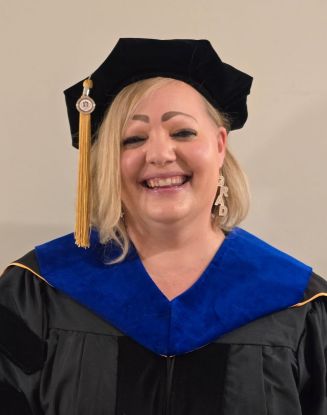
Dr. Sarah Beaver, Class of 2026
Palestinian Americans’ history of forced displacement and loss of national identity, coupled with their marginalized status in the US, presents significant barriers to belonging. This constructivist grounded theory qualitative study investigated how 20 primarily second-generation Palestinian American women generally construct and navigate belonging, and how the genocide in Gaza has specifically affected their identity and belonging construction processes. This study explains how social interactions and indirect conflict affect identity and belonging processes.
Students enrolled in the Systems, Families, and Couples PhD program who are interested in obtaining certification in Play Therapy or Drug & Alcohol Counseling will receive a tuition waiver for the certificate program of their choice, as space permits. Students interested in this benefit are required to enroll in elective courses specified by their academic advisor. Tuition waivers do not apply to any units used to support the student's primary degree program.
Apply Here Visit Our Campus Questions? Message us!
Strong applicants demonstrate intellectual curiosity, a commitment to a systems perspective, and a desire to integrate research, teaching, and applied work. The program seeks students who are motivated, reflective, and prepared to engage in rigorous doctoral training focused on individuals, couples, and families within various cultural and relational contexts.
The PhD in Systems, Families, and Couples is a scientist-practitioner program designed to prepare scholars, educators, and applied professionals who study relational systems across family, couple, and community contexts. The curriculum emphasizes researcher development, teaching preparation, and applied systems work. The program prepares graduates for academic, research, leadership, and policy-oriented roles in universities, research institutes, healthcare systems, nonprofit organizations, and related settings, as well as for developing and leading their own programs or organizations.
Applicants are encouraged to have a general area of research interest at the time of application; however, a fully developed research focus is not required. The program emphasizes mentorship and scholarly development, allowing students to refine and expand their research focus as they progress through training.
Faculty represent a wide range of research expertise related to systems, couples, and family processes. Detailed descriptions of each faculty member's research interests are available in the Counseling and Family Sciences department's faculty directory.
The program offers funding opportunities through research, teaching, and graduate assistantships. These positions provide financial support while offering valuable professional development experiences. Funding availability and structure may vary by year, and admitted students receive detailed information about current opportunities.
The program is delivered in a hybrid format. Classes meet twice weekly on Tuesdays and Thursdays. Tuesday classes are held online, while on-campus classes take place on Thursday. This structure is designed to support integration of coursework, research, and professional development while maintaining a strong cohort-based learning experience.
A clinical mental health master's degree is not required for admission. However, applicants without a clinical mental health background may be required to complete up to 12 additional units of Marriage and Family Therapy coursework as part of their program of study.
Students in the program represent varied cultural, academic, and personal backgrounds. As part of a faith-based institution, the program welcomes individuals from a wide range of belief systems and identities and is committed to fostering an inclusive, respectful, and supportive learning environment.
Yes. Most students work part time to full time within the program. The program is designed to support students' professional engagement while maintaining the rigor and expectations of full- or part-time doctoral training.