
Online Info Sessions
Questions about our programs? Join the Department of Counseling and Family Sciences for one of our helpful online info sessions.
Register

The Counseling MS program at Loma Linda University prepares students to become skilled, compassionate clinicians ready to serve individuals, couples, and families across a broad range of clinical settings. Grounded in LLU's commitment to whole person care, this 90-unit, LPCC-track program integrates rigorous academic preparation with supervised clinical experience—equipping graduates to meet the educational requirements for licensure through the California Board of Behavioral Sciences. Students benefit from individualized faculty advising, a low faculty-to-student ratio, and the option to add a Play Therapy or Drug and Alcohol Counseling certificate at no additional tuition cost. Whether completed in two years full time or extended through a part-time plan of study, the program offers a structured, supportive path toward a meaningful career in mental health.
EdD, LMFT, RPT-S
Associate Professor, Counseling and Family Sciences
Director, Counseling MS and Drug & Alcohol Counseling Certificate Programs
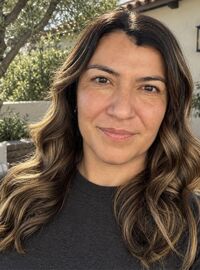
Graduates of the Counseling MS program are prepared to pursue licensure as a Licensed Professional Clinical Counselor (LPCC) through the California Board of Behavioral Sciences (BBS). LPCCs are authorized to work as independent clinicians treating individuals, couples, and families across a wide range of settings—including community mental health agencies, healthcare and medical settings, educational institutions, substance use treatment programs, faith-based organizations, and private practice.
Students complete a minimum of 280 hours of supervised clinical experience as part of the program. Placements reflect each student's interests and developing areas of specialization, and may include Loma Linda University Health's Behavioral Medicine Center, community mental health agencies, employee and student assistance programs, and other social service organizations. The department supports students in planning and approving practicum sites throughout the placement process.
To be eligible for admission to the Counseling MS program, applicants must have a bachelor’s degree with a minimum overall grade point average (GPA) of 3.0 in the last 45 quarter (30 semester) credits from a regionally-accredited institution and meet all other requirements outlined in the University Catalog. In addition, applicants must provide evidence of academic competence, professional comportment, and mature judgment. Individuals whose undergraduate degree is in still progress may be accepted pending satisfactory completion prior to beginning the master’s degree program. Applicants with an undergraduate degree offered in a language other than English must provide TOEFL scores in accordance with university policy.
Applicants may apply to begin the Counseling MS program full time or part time in Fall (September). Application deadlines vary according to the academic calendar and are posted. Applicants should plan on the process taking a minimum of two to three months.
Applications for admission are completed, paid for, and submitted online. Applicants are asked to provide current and permanent contact information, academic history, names of three recommenders, and a description of their rationale choosing to enroll in the Counseling MS program at Loma Linda University.
On the application form, individuals are asked to list the names, professional positions and e-mail addresses of three individuals who can recommend them for the Counseling MS program. At least two of the recommenders should be current or former professors who know the applicant's academic history, and one of the recommenders can be a current or former employer or supervisor. Recommendations from friends, relatives, or co-workers are not acceptable. When the application is submitted each of these individuals will receive e-mail with a link to access the recommendation form, which is to be completed and submitted online.
It is the applicant's responsibility to contact all colleges and universities attended since graduating high school and request that sealed, official transcripts be sent directly from the institution to the following address:
Admissions Processing
Loma Linda University
11139 Anderson St.
Loma Linda, CA 92350
After three recommendations and all official transcripts are received, qualified applicants will be invited to an on-campus or phone conference interview with faculty. Following that interview, faculty make a recommendation to the dean regarding acceptance.
Applicants will be notified of the admissions decision within two to three weeks following the interview.

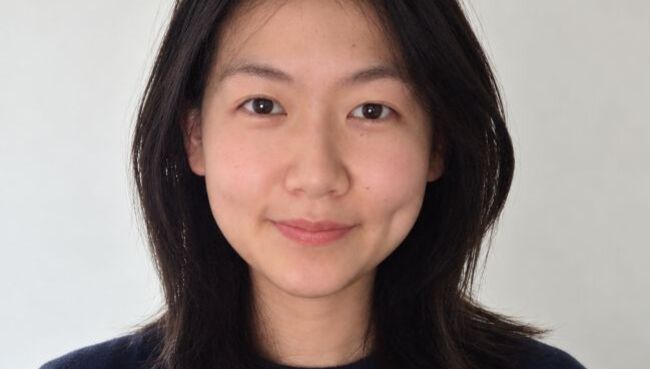
Being part of the journey at Loma Linda University has been a tremendous honor. As I work toward becoming an ethical and competent mental health clinician, I am grateful for the continuous guidance, encouragement, and resources provided by the faculty and staff. Their support has empowered me to go the extra mile in my academic and professional development. Looking back, I have gained invaluable knowledge and experience in clinical diagnosis, advocacy, clinical site selection, and many other areas—far beyond what I could have imagined before beginning this program.
Most candidates enter the Counseling MS program in Fall Quarter and complete at the end of Spring Quarter in their second year. This requires seven consecutive quarters of full-time coursework and commitment to the practicum experience.
Please Note: The curriculum of this program includes attendance during the summer terms.
This sample plan of study is provided as a general guide to illustrate the typical sequence of courses for this program. Course offerings, sequencing, and scheduling are subject to change based on curricular revisions, faculty availability, and student progression. Students who take a Leave of Absence (LOA) or enroll on a part-time basis should expect their program completion term to be extended. Students are encouraged to consult with their academic advisor for individualized academic planning.
| *Summer | Units | Fall | Units | Winter | Units | Spring | Units |
| COUN 540 | 3 | COUN 528 | 3 | COUN 577 | 3 | ||
| COUN 575 | 3 | COUN 541 | 2 | COUN 542 | 2 | ||
| COUN 556 | 3 | RELR 540 | 3 | COUN 604 | 3 | ||
| COUN 614 | 3 | COUN 644 | 3 | COUN 584 | 3 | ||
| COUN 515 | 3 | COUN 501 | 3 | ||||
| COUN 547 | 3 | (3-unit elective) | **3 | (3-unit elective) | **3 | ||
| Total Quarter Units | 18 | 11 | 14 |
Total Year 1 Units: 43 units
| Summer | Units | Fall | Units | Winter | Units | Spring | Units |
| COUN 568 | 3 | COUN 576 | 3 | COUN 524 | 3 | COUN 675 | 1 |
| COUN 638 | 3 | COUN 543 | 2 | COUN 624 | 3 | COUN 674 | 3 |
| COUN 579 | 4 | COUN 502 | 3 | COUN 544 | 2 | COUN 546 | 2 |
| COUN 678 | 3 | COUN 580 | 4 | (3-unit elective) | **3 | (3-unit elective) | **3 |
| Theory elective | 2 | ||||||
| Certificate coursework*** | Certificate coursework*** | Certificate coursework*** | Certificate coursework*** | ||||
| Total Quarter Units | 15 | 12 | 8 | 6 |
Total Year 2 Units: 41 units
**Elective Units: 6 units (can be taken in the identified quarters above)
Total Program Units: 90 units
*The Academic Year begins Summer Quarter. Students entering their programs will begin Fall Quarter and will not have classes during the Summer Quarter of their first year.
**Students are required to take 8 elective units. The required 2-unit theory course (3-4 theory course options) must be taken during the Summer Quarter of Year 2. The other six electives can be taken in quarters identified in the tables above.
***Students can take courses associated with the Play Therapy Certificate or the Drug and Alcohol Counseling Certificate (DACC). Courses for these certificates will be taken as program electives. All units above the primary program are eligible for tuition waivers. Certificates are taken during the second year of the primary program, and students must apply to the certificate program during Fall or Winter quarter of Year 1.
Students entering an MS degree program within the Department of Counseling and Family Sciences who are interested in obtaining certification in Play Therapy or Drug & Alcohol Counseling will receive a tuition waiver for the certificate program of their choice. Students interested in this benefit are required to enroll in elective courses specified by their academic advisor. Tuition waivers do not apply to any units used to support the student's primary degree program.
The academic programs at Loma Linda University are regionally accredited by the WSCUC (Western Association of Schools and Colleges [WASC] Senior College and University Commission). The Licensed Professional Clinical Counselor (LPCC) program is approved by the California Board of Behavioral Sciences (BBS).
Apply Here Visit Our Campus Questions? Message us!
Applications received by the priority deadline are reviewed first and receive admission responses earlier. Applications received after the priority deadline and before the standard deadline are reviewed as they are completed until the program has reached capacity. If you have any questions about when your application might be reviewed, please contact the program director.
The Counseling MS program is offered as an on-campus program within the School of Behavioral Health, with some program requirements offered online.
Counseling MS courses follow a structured weekly schedule by year in the program. First-year students are scheduled for classes on Tuesdays and Thursdays, with course times varying by quarter and typically ranging between 8:30 AM and 9 PM. Second-year students are scheduled for classes on Mondays and Wednesdays, also with varying start and end times.
Students are strongly encouraged to reserve their assigned class days for coursework, studying, and related academic responsibilities and to avoid scheduling clinical work or other commitments on those days. Students should plan for regular on-campus attendance on their scheduled class days. Specific course days and times are published prior to registration each quarter. Course schedules are subject to change, and students are responsible for consulting with their faculty advisor each quarter during academic planning and registration.
The Counseling MS program requires completion of 90 quarter units of graduate coursework. Students enroll full time in the program; however, in some cases full-time enrollment may not be possible. Requests for a part-time plan of study are considered on a case-by-case basis.
Graduate programs at Loma Linda University are considered full-time at 8 units; however, full-time study in the Counseling MS program typically involves enrollment in 12–18 units per quarter. The program is designed to be completed in approximately two years for full-time students. Part-time plans of study may extend the length of the program.
Students complete a minimum of 280 hours of supervised clinical experience as part of the Counseling MS program. These hours include direct client contact such as working directly with clients, completing intake and required documentation, gathering clinical information, and shadowing advanced clinicians or participating in co-therapy. Students must receive one unit of supervision for every five client contact hours.
Clinical training takes place in approved practicum sites, which may include LLU-affiliated clinics and a variety of community mental health settings. The department supports students in planning for clinical placements, approving practicum sites, and working directly with the Director of Clinical Training during the placement process.
Yes. The Counseling MS program is designed to meet the educational requirements for LPCC licensure through the California Board of Behavioral Sciences. The program aligns with California licensure standards. Students seeking licensure in other states are encouraged to review state-specific requirements.
Graduates commonly work in community mental health agencies, healthcare and medical settings, educational institutions, substance-use treatment programs, faith-based organizations, and other clinical and community settings.
Yes. Students may pursue optional certificates or specializations such as Drug & Alcohol Counseling or Play Therapy, depending on eligibility and availability. Certificates and specializations are designed to complement the primary Counseling MS program and do not increase the total cost of the degree. Students typically complete up to two certificate courses as program electives and receive tuition waivers for remaining certificate coursework. Tuition waivers apply only to certificate courses not used for electives and do not reduce or replace tuition required for the primary program.
Students receive individualized faculty advising focused on academic planning, clinical readiness, and professional development. Students are encouraged to reach out early to their advisor and/or program director when concerns arise and to follow guidance provided during quarterly advising meetings before making changes to coursework or clinical placement.
Applicants must hold a bachelor's degree from a regionally accredited institution, meet the 3.0 minimum GPA requirement, submit three letters of recommendation, a personal statement, and complete a faculty interview. No specific prerequisite coursework, field experience, or standardized exams are required for admission.
Estimated cost of attendance information is available here. Additional support is available through Student Financial Services and the Office of Financial Aid.