
Online Info Sessions
Questions about our programs? Join the Department of Counseling and Family Sciences for one of our helpful online info sessions.
Register

Loma Linda University's on-campus Master of Science in Marital and Family Therapy offers one of the most immersive MFT training environments in California. COAMFTE-accredited and taught by experienced clinician-educators, the program combines rigorous academic preparation with hands-on clinical training across the Loma Linda University Health system, including the Medical Center, Children's Hospital, the Behavioral Medicine Center, and the Behavioral Health Institute. Full-time students complete the program in just two years, and on-campus students have the unique option to pursue dual licensure as both an LMFT and LPCC by adding four units to their program. The result is a training experience grounded in whole person care, shaped by the unique clinical and community resources of the Loma Linda University campus.
DMFT, MA, LMFT, RPT
Assistant Professor, Counseling and Family Sciences
Director, Marital and Family Therapy MS Program
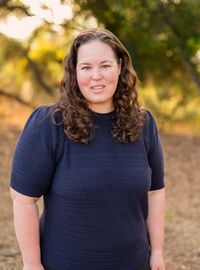
The Loma Linda University MFT MS program is one of the most well-established in California, built on a whole person care philosophy and a Christ-centered commitment to promoting wellness for individuals and families. A low faculty-to-student ratio allows for significant academic and professional mentoring, and the program is shaped by the values of compassion, integrity, excellence, freedom, and justice.
MFT students have access to a rich array of multidisciplinary training settings within Loma Linda University Health, including the Medical Center, Children's Hospital, the inpatient Behavioral Medicine Center, and the outpatient Behavioral Health Institute.
Most candidates enter the on-campus MFT MS program in Fall Quarter and complete at the end of Spring Quarter in their second year. This requires seven consecutive quarters of full-time coursework and commitment to the practicum experience.
Please Note: The curriculum of this program includes attendance during the summer terms.
This sample plan of study is provided as a general guide to illustrate the typical sequence of courses for this program. Course offerings, sequencing, and scheduling are subject to change based on curricular revisions, faculty availability, and student progression. Students who take a Leave of Absence (LOA) or enroll on a part-time basis should expect their program completion term to be extended. Students are encouraged to consult with their academic advisor for individualized academic planning.
| **Summer | Units | Fall | Units | Winter | Units | Spring | Units |
| MFAM 515 | 3 | MFAM 528 | 3 | MFAM 501 | 3 | ||
| MFAM 535 | 3 | MFAM 536 | 3 | MFAM 537 | 3 | ||
| MFAM 547 | 3 | MFAM 553 | 3 | MFAM 564 | 3 | ||
| MFAM 551 | 3 | MFAM 644 | 3 | MFAM 584 | 3 | ||
| MFAM 614 | 3 | MFAM 731* | 1 | MFAM 604 | 3 | ||
| MFAM 556 | 3 | MFAM 731* | 1 | ||||
| Total Quarter Units | 18 | 12 | 15 |
Total Year 1 Units: 45 units
| Summer | Units | Fall | Units | Winter | Units | Spring | Units |
| MFAM 568 | 3 | MFAM 502 | 3 | MFAM 524 | 3 | MFAM 552 | 3 |
| MFAM 735 | 0 | MFAM 567 | 3 | MFAM 624 | 3 | MFAM 637 | 3 |
| MFAM 731* | 1 | MFAM 635 | 3 | MFAM 636 | 3 | COUN 675 | 1 |
| Electives | 8 | RELR 540 | 3 | MFAM 638 | 3 | MFAM 674 | 3 |
| MFAM 731* | 1 | MFAM 731* | 1 | MFAM 731* | 1 | ||
| Total Quarter Units | 11 | 12 | 12 | 10 |
Total Year 2 Units: 45 units
Total Program Units: 90 units
*Clinical Training units are non-academic and not included in unit totals.
**The Academic Year begins Summer Quarter. Students entering their programs will begin Fall Quarter and will not have classes during the Summer Quarter of their first year.
To be eligible for admission to the Marital and Family Therapy MS program, applicants must have a bachelor's degree with a minimum overall grade point average (GPA) of 3.0 in the last 45 quarter (30 semester) credits from a regionally-accredited institution and meet all other requirements outlined in the University Catalog. In addition, applicants must provide evidence of academic competence, professional comportment, and mature judgment. Individuals whose undergraduate degree is still in progress may be accepted pending satisfactory completion prior to beginning the master’s degree program. Applicants with an undergraduate degree offered in a language other than English must provide TOEFL scores in accordance with university policy.
Applicants may apply to begin to the on-campus Marital and Family Therapy MS program full time or part time in Fall (September). Application deadlines vary according to the academic calendar and are posted. Applicants should plan on the process taking a minimum of two to three months.
Applications for admission are completed and submitted online. Applicants are asked to provide current and permanent contact information, academic history, and names of three recommenders.
On the application form, individuals are asked to list the names, professional positions and e-mail addresses of three individuals who can recommend them for the Marital and Family Therapy MS program. At least two of the recommenders should be current or former professors who know the applicant's academic history, and one of the recommenders can be a current or former employer or supervisor. Recommendations from friends, relatives, or co-workers are not acceptable. When the application is submitted each of these individuals will receive an email with a link to access the recommendation form, which is to be completed and submitted online.
All transcripts are required from all colleges/universities attended. Please have your issuing institute send your transcripts electronically to our admissions processing department at [email protected].
After three recommendations and all official transcripts are received, qualified applicants will be invited to an on-campus or Zoom interview with faculty. Following that interview, faculty make a recommendation to the Dean regarding acceptance.
Applicants will be notified of the admissions decision within two to three weeks following the interview.


Being a part of the Marital and Family Therapy MS program at Loma Linda University has been an incredibly transformative and rewarding experience. The program offers an opportunity to develop a systemic understanding of human behavior and relational dynamics. The supportive community and collaborative learning environment have been invaluable, fostering personal growth and deepening my understanding of myself as both a clinician and an individual.
The MS degree in marital and family therapy is designed to give students an excellent academic and clinical background. COAMFTE-accredited and approved by the California Board of Behavioral Sciences, the program prepares students for professional clinical practice working with individuals, couples, and families in a variety of settings—including medical, legal, educational, community mental health, managed care, church settings, and private practice.
Education and training are offered with the purpose of preparing students to be effective with a variety of mental health challenges, such as co-occurring disorders, serious emotional disorders, crisis care, chronic and/or serious mental illness, child and elder abuse, transition-to-adulthood challenges, and complex relational issues. Great care is taken to include training that addresses cross-cultural awareness, cultural humility, awareness of varied backgrounds and contexts, law and ethics, systemic approaches to treatment along with other evidence-based modalities, life-span development, family and community systems, community integration for support and resources, collaborative case coordination, and a focus on elimination of discrimination and stigma of mental illness. Education emphasis includes relational therapy, marriage and couple therapy, and systemic practice.
The on-campus MS in Marital and Family Therapy is approved by the California Board of Behavioral Sciences (BBS) to prepare its students for both the License in Marital and Family Therapy (LMFT) and the License in Professional Clinical Counseling (LPCC). For this option, students are required to add four academic units to their program.
The Medical Family Therapy Concentration or Specialization is designed for individuals with an interest in working with patients and families living with an illness, injury, or disability.
Students entering an MS degree program within the Department of Counseling and Family Sciences who are interested in obtaining certification in Play Therapy or Drug & Alcohol Counseling will receive a tuition waiver for the certificate program of their choice. Students interested in this benefit are required to enroll in elective courses specified by their academic advisor. Tuition waivers do not apply to any units used to support the student's primary degree program.
Loma Linda University's policy on anti-discrimination states the following: The University is committed to equal education and employment opportunities for men and women. While Loma Linda University (LLU) gives preference in its selection processes to students and employees who are aligned with the faith-based mission of the University and the Seventh-day Adventist Church, LLU does not and shall not unlawfully discriminate on the basis of race, color, religion, gender, sexual orientation, gender identity, national origin, medical condition, physical handicap, mental condition, veteran’s status, or age in the provision of any of its services. In the department of counseling and family sciences, we adhere to this policy and additionally do not discriminate against anyone on the basis of socioeconomic or relationship status.
The MFT programs are accredited in both formats by WSCUC and COAMFTE. Further, the content of the programs meets all requirements stipulated by the California Board of Behavioral Sciences.
For information on our student demographics, as well as student and faculty achievement information, please click here.
Apply Here Visit Our Campus Questions? Message us!
Applications received by the priority deadline are reviewed first and receive admission responses earlier. Applications received after the priority deadline and before the standard deadline are reviewed as they are submitted and until the program has reached capacity. If you have any questions about when your application might be reviewed, please contact the program director.
Loma Linda University publishes estimated cost of attendance for the on-campus MFT MS program on its official web page. Costs typically include tuition, books and materials, and estimated living expenses, which vary depending on individual circumstances. Students are encouraged to review the department's Tuition and Fees and consult Loma Linda University's Financial Aid office for the most up-to-date estimates.
No. The Marital and Family Therapy programs are not hybrid. The on-campus MFT MS and the fully online MFT MS are two distinct programs. Students are admitted into a specific format and are not permitted to move freely between the online and campus programs. Requests for program changes while enrolled are reviewed and considered on a case-by-case basis.
Currently, there are no significant department-wide grants or scholarships that cover full tuition for the MFT MS program. Students commonly apply for third-party or external grants and scholarships. Program leadership shares scholarship and funding opportunities as they arise. Loma Linda University and School of Behavioral Health scholarships may include limited awards such as the Ian and Sherani Chand Award, Global Practice Scholarships, and conference travel funds. Students are strongly encouraged to explore federal and state financial aid options, loan repayment programs, and professional association scholarships.
The Marital and Family Therapy MS program consists of a comprehensive curriculum designed to meet academic, clinical, and licensure requirements. The curriculum integrates systemic theory, evidence-based clinical practice, ethics, research, and supervised practicum training. The on-campus MFT program is 2 years full-time. There is a 3 year part-time option available. The program is on the quarter system. Each quarter is approximately 10–11 weeks.
A student who was previously enrolled in another accredited MFT program may be eligible to transfer up to nine (9) academic units into the Loma Linda University MFT MS program. Transfer courses are evaluated by the MFT MS program director to determine whether they meet accreditation and curriculum standards.
Clinical training hours accrued at another institution are not transferable under any circumstances.
The Loma Linda University Master of Science in Marital and Family Therapy (MFT)—whether on-campus or online—is accredited by the Commission on Accreditation for Marriage and Family Therapy Education (COAMFTE), the national standard for MFT education in the United States. This accreditation ensures the program's coursework and clinical training meet professional standards required for licensure preparation.
The MFT MS curriculum consists of 90 quarter units of coursework designed to prepare students for professional clinical practice. It includes theoretical foundations, ethics, systemic practice, and supervised clinical placements (practicum/internships) that fulfill educational and practicum requirements required by licensure boards.
Graduates of the MFT MS program are eligible to pursue Marriage and Family Therapist (MFT) licensure in California upon completion of the degree and the required post-degree supervised experience as defined by the California Board of Behavioral Sciences.
After graduating, students must complete required supervised clinical hours (e.g., 3,000 hours in California) under registration as an Associate Marriage and Family Therapist (AMFT) to qualify for full licensure. The program equips students with the foundational clinical skills needed for this next licensure phase.
While the MFT MS degree is accredited and designed to meet California licensure requirements, licensure laws vary by state. Each state has its own rules about acceptable degree content, required supervised hours, exams, and the transferability of out-of-state degrees.
COAMFTE accreditation does make the degree more broadly recognized and can facilitate licensure eligibility in many states; however, you must verify requirements for the specific state where you intend to practice. Some states may require additional coursework, supervised hours, or exams that differ from California's standards.
Loma Linda University provides a License Disclosure Statement that explains how the MFT program's curriculum relates to state licensure requirements. This includes details on whether the program meets the educational requirements for licensure in specific states and clarifies that licensure is ultimately determined by the licensing board of each state.
For state-by-state information, professional associations like the American Association for Marriage and Family Therapy (AAMFT) have resources listing licensure boards and requirements by state.