
Online Info Sessions
Join us for one of our online info sessions to learn more about our outstanding programs and get your questions answered!
Register

Loma Linda University's dual MSW/MS in Criminal Justice is a unique program for students called to serve at the intersection of behavioral health and the justice system. Available in 2-year full-time or 3-year part-time formats, it combines advanced clinical social work training with a restorative, whole person approach to crime, healing, and community restoration. You'll graduate with two master's degrees equipped for roles spanning direct clinical practice, program leadership, and systems-level impact at the local, national, and international levels.
DSW, MSW, MBA, LCSW
Assistant Professor, Social Work and Social Ecology
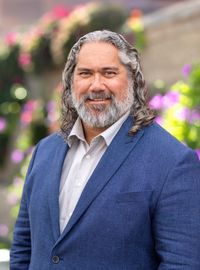
Director, Master of Social Work (MSW Online and On-Campus) and Master of Social Work (MSW) with Criminal Justice (MS) Programs
The Social Work (MSW) with Criminal Justice (MS) program equips students with rigorous preparation in clinical social work alongside essential policy studies and clinical services in the field of criminal justice.
Crime disrupts personal and community relationships, endangers public health and safety, and threatens the moral contours of everyday social life. Loma Linda University's mission "to make man whole" provides a powerful and much-needed context in which criminal justice can be addressed on the basis of healing and restoration. The principles of restorative justice elevate the dimensions of justice that:
This multidisciplinary approach to deviance and the administration of justice takes into consideration the social, physical, and spiritual wellbeing of victims, offenders, and communities—which provides a deeper understanding of crime and the struggle of the modern criminal justice system.
These sample plans of study are provided as general guides to illustrate the typical sequence of courses for this program. Course offerings, sequencing, and scheduling are subject to change based on curricular revisions, faculty availability, and student progression. Students who take a Leave of Absence (LOA) or enroll on a part-time basis should expect their program completion term to be extended. Students are encouraged to consult with their academic advisor for individualized academic planning.
All CRMJ courses must be taken on campus.
The MSW curriculum integrates social work theory, research, and hands-on practicum experiences to prepare students for advanced clinical practice. Coursework explores human behavior, diversity, social policy, research, ethics, behavioral health, assessment and diagnosis, trauma-informed care, and evidence-based interventions. Students also complete 1,080 hours of supervised field education in professional practice settings.
The Qualifying Review is a program milestone completed after students have substantially finished their generalist coursework and practicum. Administered during the summer, the review assesses students' ability to integrate and apply foundational social work knowledge, values, and skills in professional practice.
The review helps students and faculty identify strengths, areas for growth, and learning goals for the advanced clinical practice year. A passing score is required for progression in the MSW program.
Course Descriptions List of Selectives
Note: For additional sample plans of study, please contact the department at [email protected].
Most 2-year candidates enter the on-campus MSW/Criminal Justice MS dual degree program in Fall Quarter and complete at the end of Spring Quarter of their second year. This requires seven consecutive quarters of coursework and commitment to the practicum experience. Summer Quarter attendance is required during the second year.
| Fall | Units | Winter | Units | Spring | Units |
| SOWK 513 | 4 | SOWK 518 | 3 | RELR 540 | 3 |
| SOWK 514 | 4 | SOWK 548 | 5 | SOWK 520 | 3 |
| SOWK 517 | 4 | SOWK 510 | 3 | SOWK 519 | 3 |
| SOWK 505 | 2 | SOWK 574 | 3 | SOWK 585 | 3 |
| SOWK 578 | 0 | SOWK 757B | 180* | SOWK 659 | 2 |
| SOWK 757A | 180* | SOWK 700 | 160* | SOWK 757C | 180* |
| SOWK 700 | 160* | SOWK 700 | 160* | ||
| Total Quarter Units | 14 | 14 | 14 |
Total Year 1 Units: 42 units
| Summer | Units | Fall | Units | Winter | Units | Spring | Units |
| SOWK 663 | 3 | SOWK 695A | 2 | SOWK 695B | 2 | SOWK 695C | 2 |
| SOWK 648 | 3 | SOWK 613 | 4 | SOWK 620 | 2 | SOWK 647 | 3 |
| CRMJ 574 | 3 | SOWK 662 | 4 | SOWK 661 | 4 | SOWK 617 | 3 |
| CRMJ 517 | 3 | CRMJ 515 | 3 | CRMJ 519 | 2 | SOWK 681 | 2 |
| CRMJ 787 | 55* | SOWK 787A | 220* | SOWK 787B | 220* | CRMJ 620 | 3 |
| CRMJ 787 | 55* | CRMJ 787 | 55* | SOWK 787C | 220* | ||
| SOWK 705 | 200* | SOWK 705 | 200* | CRMJ 787 | 55* | ||
| SOWK 705 | 200* | ||||||
| Total Quarter Units | 12 | 13 | 10 | 13 |
Total Year 2 Units: 48 units
Total Program Units: 90 units
*These courses reflect practicum hours, which are charged at a lower rate than academic units.
Please Note: A Qualifying Review must be completed at the end of the first Spring Quarter. CRMJ 787 meets five times throughout the quarter; class days and times are arranged by the instructor.
Most 3-year candidates enter the online MSW/on-campus Criminal Justice MS dual degree program in Fall Quarter and complete at the end of Spring Quarter of their third year. This requires eleven consecutive quarters of coursework and commitment to the practicum experience. Summer Quarter attendance is required during the second and third years.
| Fall | Units | Winter | Units | Spring | Units |
| SOWK 513 | 4 | SOWK 517 | 4 | SOWK 510 | 3 |
| SOWK 505 | 2 | SOWK 585 | 3 | SOWK 514 | 4 |
| SOWK 757A | 10* | SOWK 757A | 10* | SOWK 757B | 10* |
| SOWK 700 | 96* | SOWK 700 | 96* | SOWK 700 | 96* |
| SOWK 578 | 0 | ||||
| Total Quarter Units | 6 | 7 | 7 |
Total Year 1 Units: 20 units
| Summer | Units | Fall | Units | Winter | Units | Spring | Units |
| SOWK 518 | 3 | SOWK 519 | 3 | SOWK 548 | 5 | SOWK 613 | 4 |
| SOWK 520 | 3 | SOWK 574 | 3 | SOWK 662 | 4 | SOWK 681 | 2 |
| SOWK 757B | 10* | SOWK 757C | 20* | SOWK 787A | 10* | SOWK 659 | 2 |
| SOWK 700 | 96* | SOWK 700 | 96* | SOWK 705 | 100* | SOWK 787A | 10* |
| SOWK 705 | 100* | ||||||
| Total Quarter Units | 6 | 6 | 9 | 8 |
Total Year 2 Units: 29 units
| Summer | Units | Fall | Units | Winter | Units | Spring | Units |
| SOWK 620 | 2 | RELR 540 | 3 | CRMJ 519 | 2 | CRMJ 620 | 3 |
| SOWK 648 | 3 | CRMJ 515 | 3 | SOWK 695B | 2 | SOWK 647 | 3 |
| SOWK 663 | 3 | SOWK 695A | 2 | SOWK 695C | 2 | SOWK 617 | 3 |
| CRMJ 574 | 3 | SOWK 661 | 4 | CRMJ 787 | 55* | CRMJ 787 | 55* |
| CRMJ 517 | 3 | CRMJ 787 | 55* | SOWK 787C | 10* | SOWK 787C | 10* |
| CRMJ 787 | 55* | SOWK 787B | 10* | SOWK 705 | 100* | SOWK 705 | 100* |
| SOWK 787B | 10* | SOWK 705 | 100* | ||||
| SOWK 705 | 100* | ||||||
| Total Quarter Units | 14 | 12 | 6 | 9 |
Total Year 3 Units: 41 units
Total Program Units: 90 units
*These courses reflect practicum hours, which are charged at a lower rate than academic units.
Please Note: A Qualifying Review must be completed at the end of the second Fall Quarter. A total of 480 SOWK 757ABC practicum hours and 60 seminar hours must be completed by the end of the second Fall Quarter. Additionally, a total of 600 SOWK 787ABC practicum hours and 60 seminar hours must be completed by the end of the third Spring Quarter. This averages approximately 10 to 12 hours per week. CRMJ 787 meets five times throughout the quarter; class days and times are arranged by the instructor. Requires an additional 200 hours of practicum and 20 hours of seminar for completion.
The mission of the combined Master of Social Work and Master of Science in Criminal Justice at Loma Linda University is to facilitate more efficient completion of two graduate degrees for students with strong interests in, and who are dedicated to, the advanced practice of both social work and criminal justice. The master's program in social work emphasizes ecological systems—a perspective that focuses on the interaction of a person or system in relation to their environment. The master's degree in criminal justice aims to prepare students to think critically, analytically, and creatively about the challenges of crime and social control in the contemporary world.
The combination of these two programs has guided the development of the foundation curriculum, professional concentrations, and selection of practicum sites for this dual degree program.
A total of 90 units are required for completion, including:
Apply Here Watch Info Session Video Visit Our Campus Questions? Message us!
The MSW/MS in Criminal Justice program is a 90‑unit integrated dual degree preparing students for clinical social work practice within criminal justice settings. It combines advanced MSW clinical training with forensic behavioral health and criminal justice‑system coursework.
Students earn a Master of Science in Criminal Justice degree in addition to the MSW. The program integrates clinical social work training with policy, forensic behavioral health, interdisciplinary collaboration, and justice‑system coursework. Students learn to work with law enforcement, courts, probation, parole, corrections, and reentry settings using trauma‑informed and restorative practices.
All MSCJ courses must be taken on campus, and they are scheduled in person on Monday evenings to support consistent planning for dual‑degree students.
Dual degree students must complete the full MSW field sequence:
Dual degree students are placed in agencies that meet MSW CSWE competencies with a criminal justice population. Field hours must meet all MSW practicum requirements (supervision, direct practice %, documentation).
Placements are arranged by the Director of Field Education; students must follow the same placement protocols as all MSW students and may not independently contact agencies.
No. Practicum hours must be completed in full. However, Advanced Standing students may variance in their BSW generalist hours (see Advanced Standing information).
Yes. Students must undergo:
No. The practicum workload plus MSCJ coursework generally exceeds full‑time capacity. However, online students who are eligible for the dual degree program may work full time but it is not recommended.
Graduates are prepared for roles such as forensic mental health social workers, clinical social workers, psychiatric social workers, community and medical social workers, and practitioners in courts, detention centers, diversion programs, and reentry services.