
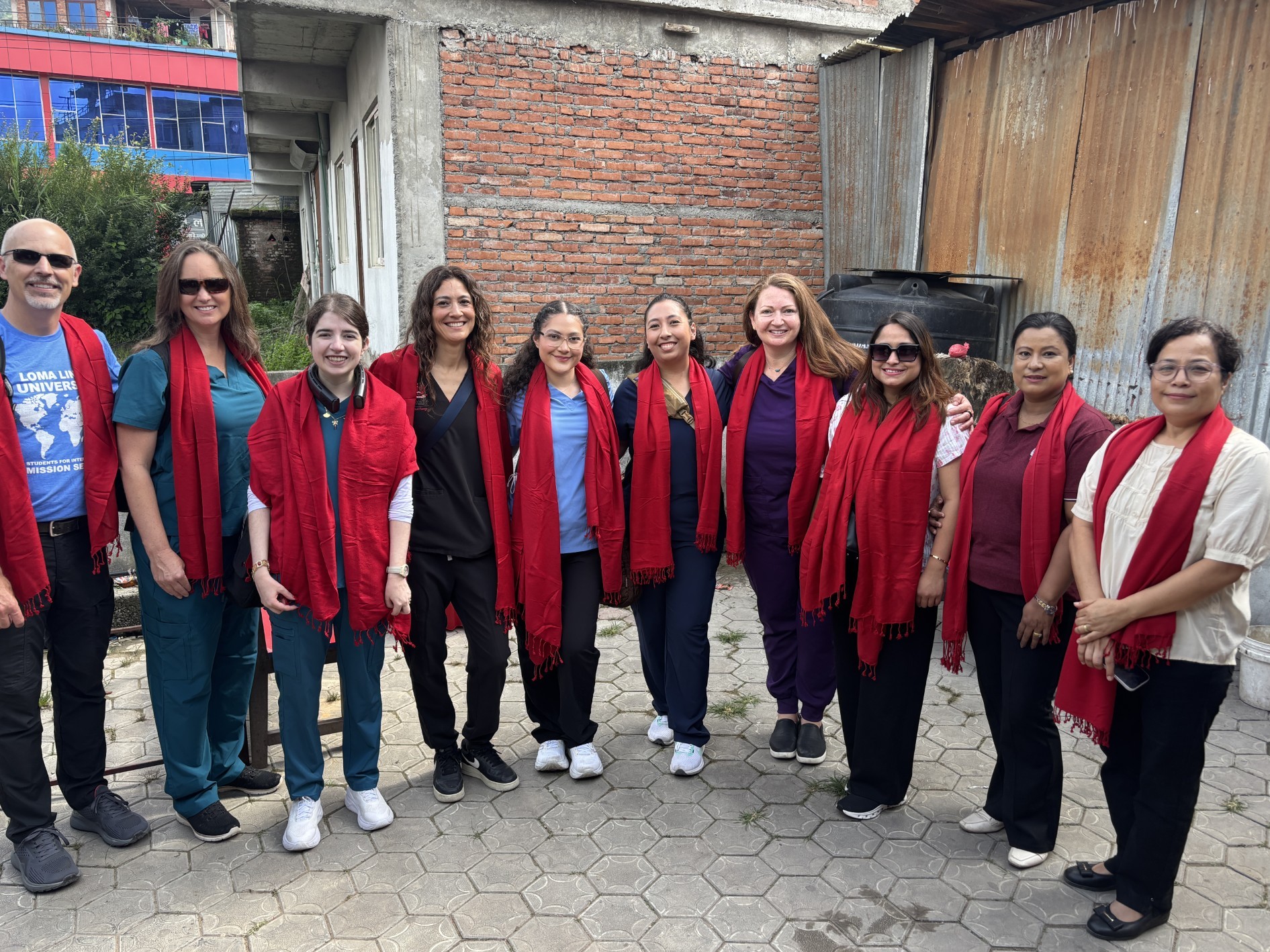
My attraction to the Himalayan mountains initially piqued my interest in joining this Students for International Mission Service (SIMS) mission trip to Nepal. Our interdisciplinary team was composed of specialists and students from physical therapy, radiology, speech-language pathology, nutrition and dietetics, pediatric and adult nursing, and behavioral health. Our mission was to promote wholeness and whole-person care by serving local patients, community members, and schools.
We were warmly welcomed at Scheer Memorial Adventist Hospital (SMAH) with open arms and enthusiastic greetings, which made it easy to integrate into a one-week immersive service experience. I initially thought I would be shadowing and providing support to patients experiencing psychiatric needs during my mission. While patient-facing work was part of my role, it comprised the minority of my time.
The patients, health care providers, educators, and administrators quickly shared their needs and areas of interest with us. They enthusiastically and rapidly organized lectures, seminars, working groups, collaborative lunches, meetings with community partners, and opportunities to shadow their experts. They requested information on interventions, depression and suicide screening tools, nervous system regulation techniques, and strategies for supporting change related to healthier lifestyles and substance use. I soon realized that the behavioral health component of the trip was focused on the broad dissemination of crisis survival skills, nervous system regulation techniques, and strategies for coping with daily work in high-stress environments where suicide is a predominant concern.
The requests for presentations came like fast-spreading news, and with them, the skills I learned in Loma Linda University's Doctor of Social Work (Clinical Leadership) program, as well as through the dissemination of my doctoral project, were put to the test through a multitude of PowerPoint presentations and talking points.
- Educational presentations included sharing the Nepali-validated PHQ-2 and suicide screening tools, as well as in vivo demonstrations of Dialectical Behavior Therapy's paced breathing exercise, Motivational Interviewing's Decisional Balance Exercise, and Dr. Dan Siegel's concept of the Window of Tolerance. I learned that these doctors recognize what behavioral health challenges "sound" like in their patients and are eager to implement additional strategies to address the widespread behavioral health challenges experienced by community members.
- Interdisciplinary collaboration with stakeholders at SMAH's Nursing College included role-plays and demonstrations on how to support young adults experiencing high stress, manage crises, assess for risk, and conduct a needs assessment to determine what students required to feel more supported. I learned that the faculty, students, and administration were highly motivated to learn more about behavioral health.
- Community engagement with SMAH's internationally renowned partner, SOS School, provided the opportunity to engage educators in a lecture on nervous system regulation, Polyvagal Theory, Acceptance and Commitment Therapy's Choice Point, and the concept of co-regulation: utilizing teachers' nervous systems to support students' nervous systems. We also explored tools including morning check-ins, a calm corner, daily self-care using Ayurvedic Dinacharya, and more. I learned that the educators were very enthusiastic about learning tools to support students in new and creative ways, and many left intending to create calm corners in their classrooms.
- Rounding with hospital staff facilitated opportunities to brainstorm coping strategies for working with challenging clinical presentations, including opportunities to teach immediate crisis survival skills from dialectical behavior therapy, such as the TIP skill, psycho-aromatherapy, progressive muscle relaxation techniques, and Somatic Experiencing's visualization of survival and protective responses. I learned that many of the skills I teach in the US may be readily transferable to the Nepali cultural context.
Behavioral health in Nepal is different from behavioral health in California. Patients sometimes struggled to name their feelings, while doctors and nurses were highly attuned to the somatic presentations to which years of suppressed emotions may have contributed. The term "mental health" was not commonly used and was instead referred to in terms of behavioral health and psychiatry. Family involvement is often extensive, and health care providers frequently work with the whole family to support the identified patient, with multiple family members presenting for both inpatient and outpatient appointments. The concept of confidentiality also differs significantly, as colleagues openly refer and consult with one another, and privacy curtains seemed to be less frequently utilized in inpatient wards. Spiritual beliefs around embodiment and possession also emerged as clinically significant themes, often linked to dissociative episodes.
The learning was endless, co-created, and enriching. Now that I am back in the US, I am able to utilize what I learned about cultural differences at SMAH's outpatient clinic as I serve the increasingly diverse population in Southern California. When patients from other cultures struggle to quantify their responses to some clinical assessment questions, I reference the idea of a cup of water, as utilized in the Nepali version of the PHQ-2 questionnaire, and how full it is to help gauge a patient's perceived symptom frequency.
Upon our return, Nepal suffered a major disaster involving intense flooding. I have sent prayers, words of support, and offers of aid to our counterparts in Nepal, as well as to all of the impacted Nepalis and staff at Scheer Memorial Hospital. May the support we offered while there help in some small way, and may Nepal heal from this time of devastation and loss. We thank you for inviting us to your beautiful country and pray for healing, especially now.
Written by alumna Elana Berman, DSW, LCSW, SEP


