
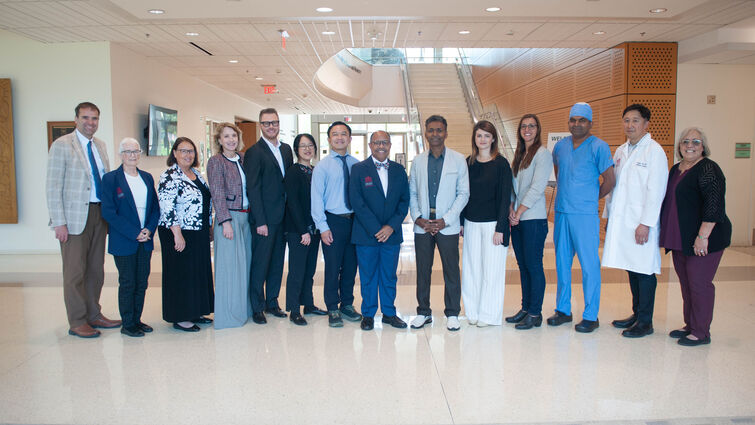
Susanne Montgomery, PhD1; Dorothy Awuah, MPH2; Alex Dubov, PhD, DrPH1; Samuel Habimana, PhD1; Daniel Ganu, DrPH2
1Loma Linda University School of Behavioral Health, & 2Valley View University
Loma Linda University's School of Behavioral Health, in partnership with Valley View University, is launching a new initiative in Ghana's mining regions titled "Building Capacity for HIV Self-Testing and Prevention Through Community Pharmacies in Ghana's Mining Regions." Led by Dr. Susanne Montgomery, Ms. Dorothy Awuah, Dr. Alex Dubov, Dr. Samuel Habimana, and Dr. Daniel Ganu, the project addresses a persistent gap in Ghana's progress toward the UNAIDS 95–95–95 targets, which call for 95% of people living with HIV to know their status, 95% of those diagnosed to receive antiretroviral treatment, and 95% of those on treatment to achieve viral suppression (2). Progress toward these targets remains uneven, particularly among youth and mobile populations (5). In the mining communities of Ghana's Eastern Region, HIV prevalence is estimated at 4.2%, more than twice the national average (4), a disparity attributable to HIV-related stigma, limited health literacy, constrained access to healthcare services, and the labor mobility characteristic of the mining sector (1,3). In these isolated areas where health care coverage is low and few opportunities for HIV testing exist, young people often use pharmacists to address their illness-related needs. Building on this opportunity, this project will employ a community-engaged approach to co-develop and pilot a pharmacy-based HIV prevention package tailored to the needs and preferences of young adults in these underserved communities.
The study will be conducted in three phases utilizing a community-engaged, mixed-methods design. In the first phase, we will work with young people to examine young adults' HIV-related knowledge, attitudes, and behavioral barriers using the Information–Motivation–Behavioral Skills framework. In the second phase, we will assess community pharmacies' readiness to partner with us as points of outreach and education and identify the best locations to offer services. We are working with a community advisory board to identify and interview key stakeholders and map high-risk areas. In the last phase, we will work with partners to develop and conduct a pilot intervention for 40 to 50 young adults aged 18 to 25 to assess its feasibility, effectiveness, and fit for pharmacy-based testing. Through this collaboration, Loma Linda University and Valley View University aim to provide evidence for decentralized, non-stigmatizing HIV testing and prevention, build stronger ties with the community, and lay the groundwork for larger studies and future funding from organizations including the National Institutes of Health, Wellcome Trust, and the Gates Foundation.
This project is one of nine research collaborations recently funded through Loma Linda University Health's internal grant programs. Dr. Montgomery's study is a partnership with co-principal investigator Dorothy Awuah of Valley View University, and it's part of the GRASP International program supporting research across borders. Learn more about the full list of recipients and their projects.
- Bekker LG, Beyrer C, Mgodi N, Lewin SR, Delany-Moretlwe S, Taiwo B, et al. HIV infection. Nat Rev Dis Primers. 2023 Aug 17;9(1):42.
- Frescura L, Godfrey-Faussett P, Feizzadeh A, El-Sadr W, Syarif O, Ghys PD, et al. Achieving the 95-95-95 targets for all: A pathway to ending AIDS. PLoS One. 2022;17(8):e0272405.
- Opoku S, Sakyi SA, Ayisi-Boateng NK, Enimil AK, Senu E, Ansah RO, et al. Factors associated with viral suppression and rebound among adult HIV patients on treatment: a retrospective study in Ghana. AIDS Res Ther. 2022 Dec;19(1):21.
- Osei-Yeboah R, Adedze M, Bannor R, Takyibea Opoku E, Akweongo P. HIV prevalence variations in mining communities in Ghana. Journal of HIV/AIDS & Social Services. 2019 Apr 3;18(2):129–45.
- Tetteh J, Ntumy MY, Asamoah IE, Ekem-Ferguson G, Swaray SM, Yamson P, et al. Risky sexual behavior and HIV infection among Ghanaians aged 15–49: evidence from the Ghana Demographic Health Survey 2003 and 2014. J Psychosexual Health. 2024 Jul;6(3):265–73.